
Impact Report 2024: Faithfulness
Mosaic honors our legacy by staying grounded in what matters and doing the right thing even when no one’s looking.

Fundraising Success Built on Relationships
Many organizations rely on flashy, large events as their primary means of fundraising. During COVID-19, those activities came to an abrupt halt because of the risk of virus exposure in crowds.
But Mosaic’s Partners in Possibilities fundraising steadily continued by using new ways to engage people and help them still feel a part of the community, even if they were staying home.
“One of the reasons we’ve been successful is that we were able to continue working through COVID-19,” said Donna Garst, Mosaic’s Vice President of Community Relations and International Services. “We had relationships with people when the world was shut down, and we were an avenue of communication. We were able to help people by connecting with them when they were feeling isolated.”
Like every other area of Mosaic, the Partners in Possibilities fundraising quickly adapted to the pandemic environment. Instead of in-person meetings and events, virtual gatherings and phone calls became the norm for connecting with people.
“We didn’t meet in person, but we picked up the phone many, many times,” Donna said.
Mosaic community relations managers and development officers spoke with donors, volunteers and other partners routinely. Even the free, once-a-year local events where people are asked for financial support became online events, though condensed from the usual one-hour timeframe to last 30-minutes.
In FY 2024, 78 people committed to new Partners in Possibilities pledges of $5,000 or more annually, and 273 donors were already giving in active pledges of $5,000 or more. These multi-year donors are one piece of Mosaic’s comprehensive approach to fundraising.
“It was those sustainable, long-term donors that kept Mosaic able to do what we’ve done in the past,” Donna said.
“It is all about having a relationship and being connected to one another,” she said. “We care about their interests and what they want as much as what our needs are for the people we serve. There’s trust and faithfulness in each other.”
Mosaic earned that trust, she added, by faithfully ensuring donor gifts are used wisely in the best possible and most effective ways.
Since the pandemic, the Partners in Possibilities fundraising has once again returned to in-person, live events that are still free. Team members have enhanced the meetings by taking them “on the road” and hosting them at people’s worksites, churches and elsewhere.
“It started more than 10 years ago with them coming to us,” Donna said. “Now we happily will go to them wherever we have the opportunity to share Mosaic’s story.”

Partners in Possibilities Pledges FY 2024
New Donors Pledging $5,000 or more
Active Pledges of $5,000 or more
Discover the Possibilities Attendees
Attendees in FY 2024
Total Attendees Since Program Began
Three Generations of Giving
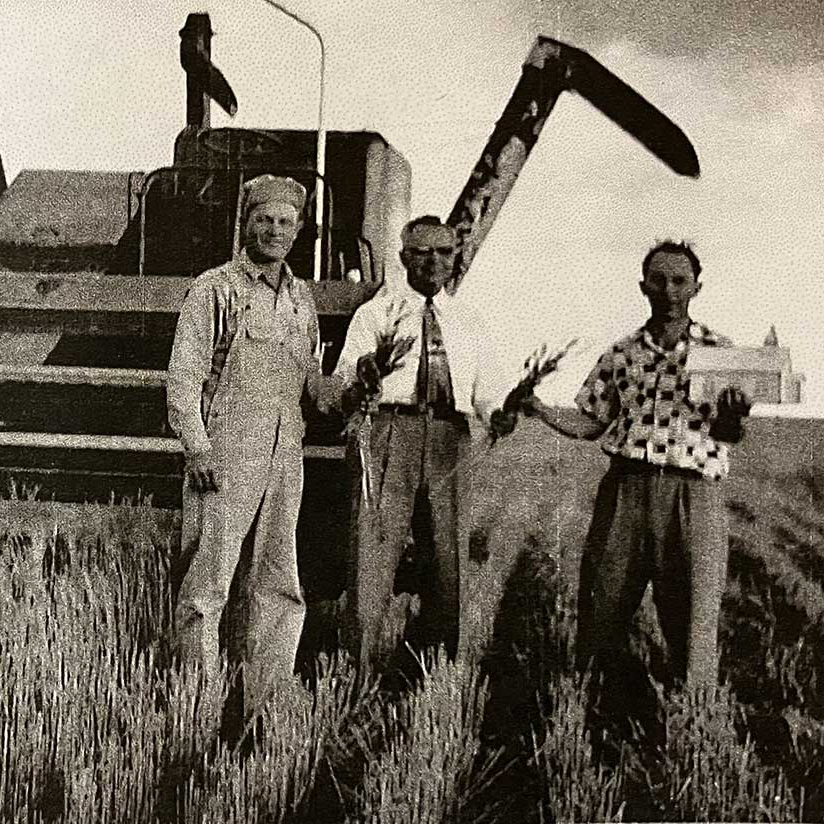
On her living room wall, Lila Nietfeld keeps a photo of her father standing in a Colorado wheat field with his pastor and a mission layman he had not previously met. It’s a memento of the time the pastor came to introduce “first fruits giving” to her father, Arthur Antholz.
Once he learned of it, her father adopted the practice of first fruits giving (sharing generously from the first fruits of the harvest), giving $25,000 to an American Lutheran Church (ALC) mission in Liberal, Kansas.
Over the years, Arthur was introduced to other organizations, to which he also gave generously. One of those was Martin Luther Home, a long-term residence for people with intellectual and developmental disabilities, which he learned of from a fellow church member. (Martin Luther Home later united with Bethphage to become Mosaic.)
“Dad had a friend who lived nearby,” Lila said. “He told my dad, ‘We need to get to Martin Luther Home. They can use support.’ The two went together, from Colorado to Beatrice, Nebraska. While there, Dad said, ‘The young people here need help. It’s too hot in that building, and we need to get air conditioning in that building.”
He gave money for the air conditioning, and from then on he made the trip back to Beatrice many times, she said, with or without the friend who introduced him to Martin Luther Home.
After she married, Lila and her husband, Clayton Nietfeld, became dry land wheat farmers. But a career change happened through the arbitrariness of nature. “We lost our shirts because we didn’t get any rain,” she said.
Clayton became an ALC parish worker and eventually a pastor. Their ministry took them to several communities, one of which was the small Nebraska town Pickrell.
“We were near Beatrice, and we became more and more connected with Martin Luther Home (MLH) and the Fruehlings,” she said. (The Fruehlings were the chaplain and the director at MLH, both sons of one of Martin Luther Home’s founders.)
Lila said her family’s faithfulness to MLH, and now Mosaic, came from several things. Most importantly, she and her family believe in the ministry and its natural caring and respect for those who reside there.
Fast forward to the 1990s, and daughter Eileen (by then married to David Stirtz) landed in Lincoln, Nebraska. Martin Luther Home had moved its offices to Lincoln in 1993 to better support the mission as it expanded into other states. Eileen began working for MLH, and continued as a receptionist for several years, until the birth of her son. Even after she left, Eileen continued to be an active volunteer and donor to MLH and, now, Mosaic.
“They offer a service with Christian love,” she said, “and I think that buoys others up, giving them the potential to live well.”