



Creating Comfort: Home Modifications, Big or Small, Can Make an Impact
Daily baths are more than just a routine for Mindy Spence. They are a source of comfort and a safe space.
It wasn’t always that way.
When she moved in with her Home Provider, Arlene Deaner, 25 years ago, Mindy loved spending time in the bathtub. Arlene joked that she would take 10 baths a day if she let her. But when physical limitations made getting in and out of the bathtub harder, Mindy’s delight turned to fear.
Arlene installed handrails and grab bars to make the process easier, but as the years passed, Mindy needed more assistance.
“It got to the point where she got really weak and couldn’t help me when I was trying to get her out of the tub,” Arlene said. “So, then I bought a sit-to-stand device that was waterproof and had a remote so I could lower her and bring her up again. But once she got into the tub, the seat wasn’t comfortable.”
Mindy became so afraid that Arlene had to take her to the shower in her room and wash her there.
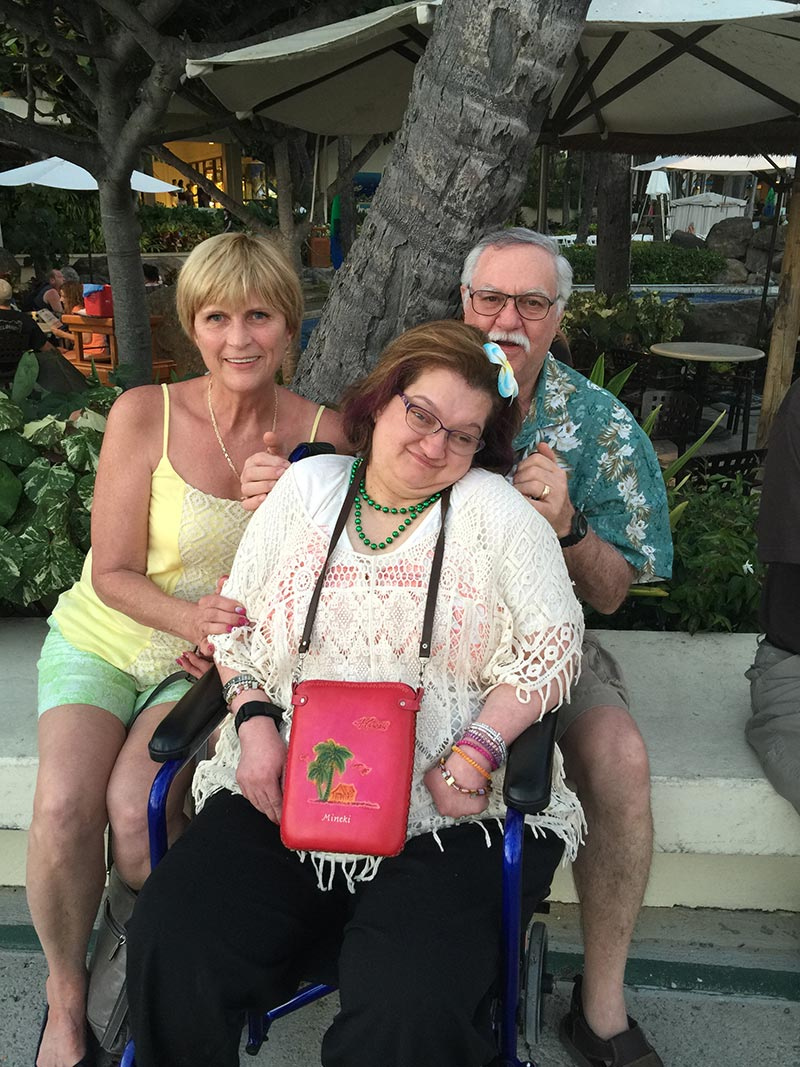
Arlene believes a big part of becoming a Home Provider is making a person feel comfortable, especially in the beginning.
“The person coming into your home doesn’t know what it’s going to be like. They don’t know if it’s okay to say you don’t like something at dinner, or they may have questions about taking a bath,” she said. “You really have to make them feel like it’s their home because they might be afraid to say, ‘I’m hungry or ‘I’d like to take a bath.’”
Part of being comfortable is feeling safe, especially for individuals with physical limitations, like Mindy. Because Mindy needs assistance with walking and getting around, Arlene has not only added handrails and grab bars to her bathroom but also other accommodations throughout her home, such as a lift recliner, a stair lift and mats. She also has wheelchairs on each level of her two-story home.
The modifications, often done at minimal cost, have made a lasting impact on Mindy, allowing her to live a good quality of life.
“If it means paying $40 so Mindy doesn’t get hurt, I’m going to do it,” Arlene said. “It’s an investment in safety.”
The latest investment is also personal.
Because Mindy had developed a fear of taking baths, Arlene began researching walk-in bathtubs.
“It’s something I had wanted to do for a long time,” she said.
The installation would be a big investment, financially, but Arlene knew it would be a great way to honor the memory of her husband, Jon, who died from cancer. Insurance money and donor funds from Mosaic helped pay for the project, which included an unexpected cost of installing a specialized water heater.
“Jon and Mindy were very close, and on the night of his passing, she was there holding his hand; she loved him to pieces,” Arlene said. “I was blessed beyond measure to have him in my life and continue to be blessed beyond measure to have Mindy in my life.”
The new bathtub, which was installed earlier this year, has been life-changing.
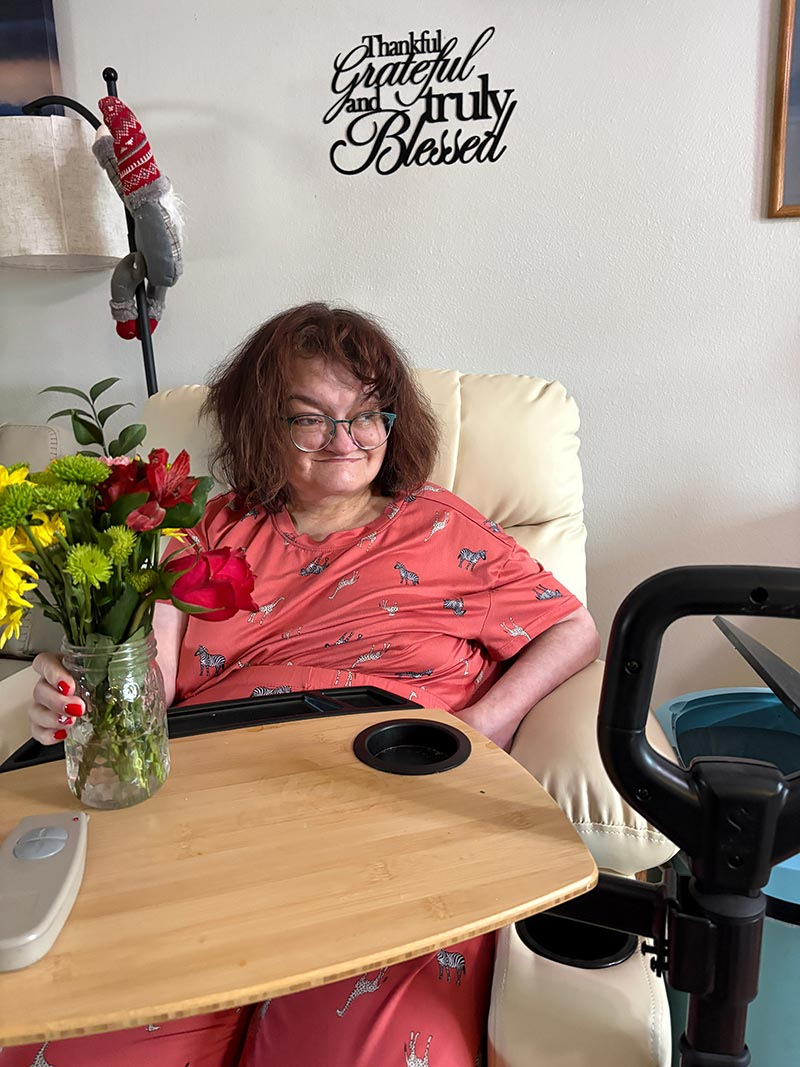
“She doesn’t have a fear of taking a bath; it’s one of her favorite things to do again,” Arlene said, noting she was hesitant at first, but once she got used to it, Mindy was back to enjoying her happy place. ” They have even added some fun and colorful bathtub stickers.
Arlene is thankful for the donor funds she received to help pay for a portion of the project. She knows not everyone can make the financial investment she did, but she encourages Home Providers and other caretakers to do what they can to assist the people they support.
Easy Home Upgrades for Accessibility
The National Center on Health, Physical Activity and Disability, a public health practice center providing inclusive health promotion programs and resources for people with disabilities, offers these ideas for low-cost modifications:
Bathroom: Install grab bars in the shower and near the toilet, use a handheld shower head, and add a raised toilet seat. If necessary, suction cup grab bars can be used for temporary needs.
Entryways: Install a small, prefabricated ramp or threshold ramp to assist with walkers or wheelchairs.
Lighting and Visibility: Add LED light bulbs for brighter, more consistent lighting and install motion-sensor lights in hallways.
Doors and Handles: Replace traditional round doorknobs with lever-style handles for easier operation by those with limited hand function.
Safety and Flooring: Remove tripping hazards such as throw rugs, secure loose carpets and use anti-slip strips on slick floors.
Kitchen and Living Space: Keep frequently used items on lower shelves and install lever-style faucets.
Arlene said the modifications she has made to her home, both big and small, give Mindy a sense of security.
“You might think adding a handrail or grab bar is minor, but to them it is life-changing,” she said. “Being able to improve someone’s quality of life and make sure they don’t get hurt is priceless.”